

Are you feeling frustrated with visa applications or worried about political instability in your home country? Imagine securing a second passport that gives you the freedom to live, work, and travel throughout the European Union. Germany offers a legal pathway to do just that. If your family history includes a German citizen, you might be eligible for German citizenship by descent. This path could unlock a permanent right of residence in the EU and provide a valuable backup plan for your future.
What’s New in German Citizenship Law for 2026?
Germany has significantly modernized its citizenship laws in 2026, making it easier for many people to claim their heritage. The biggest change is the full acceptance of dual citizenship, a major shift from previous, more restrictive policies.
These reforms, part of the new German Nationality Act, expand eligibility for descendants who were previously excluded. The Fourth Act, in particular, addresses historical injustices, opening doors for those affected by past gender-discriminatory rules. Let’s explore these changes in more detail.
The 2024 Reform: Expanded Eligibility for Descendants

The 2024 reforms have broadened the pathways for descendants of German citizens to claim their heritage. Previously, strict rules often cut off the line of descent, but the new laws are more inclusive. This is especially true for individuals whose claims were denied due to outdated gender-based rules.
This expansion means that if you have German ancestors, your chances of qualifying may be higher now than ever before. The changes acknowledge that many family members were unfairly excluded from their right to citizenship simply because of when or to whom they were born. German law now provides a remedy for these historical oversights.
Understanding these new provisions is key to determining if you and your family can benefit. The reforms create opportunities for a new generation to connect with their German roots and secure the benefits of EU citizenship.
Changes to Dual Citizenship Rules and Section 5 StAG
One of the most significant updates in the German Nationality Act is the full acceptance of dual citizenship, which took effect on June 27, 2024. Before this change, acquiring a foreign nationality often meant automatically losing your German citizenship. Now, you can become a German citizen without giving up your current passport, and Germans can acquire a foreign nationality without issue.
This change greatly simplifies the process for applicants who value holding dual nationality. It removes the need for retention permits, which were previously required to avoid losing German citizenship upon naturalizing elsewhere. This new approach embraces multiple nationalities without restriction.
Additionally, Section 5 of the Nationality Act (StAG) introduces a crucial 10-year window for those impacted by past gender-discriminatory laws. This provision allows individuals, and their descendants, who were unfairly denied citizenship to claim it by declaration until August 19, 2031.
Impact of the Reforms on Restoring German Citizenship

The recent legal reforms have a profound impact on the restoration of German citizenship, particularly for those whose families suffered due to historical injustices. Former German citizens and their descendants now have clearer and more accessible routes to reclaim their nationality. The changes address the loss of German citizenship under various circumstances, including past gender discrimination.
A major focus of these reforms is on the descendants of individuals who faced Nazi persecution. Article 116(2) of the Basic Law has been expanded, making it easier for those who fled the German territory between 1933 and 1945 to have their citizenship restored. This applies even if they later acquired another citizenship in their new home country.
This pathway acknowledges that the loss of German citizenship was often a direct or indirect result of persecution. The restoration process for these cases is a constitutional right, not a discretionary act, and is treated with high priority by German authorities.
Who Is Eligible for German Citizenship by Descent?
You might already be a German citizen without even knowing it. German citizenship law is primarily based on ius sanguinis (right of blood), meaning citizenship is passed down from a German parent to their child, regardless of the child's place of birth. If you were born to at least one German parent, you likely acquired citizenship automatically at birth.
However, the rules have changed over the years, and eligibility can depend on factors like your birth date, your parents' marital status, and the gender of your German parent. It's important to understand how your family's history aligns with the specific laws in effect at the time.
How German Ancestry Impacts Eligibility in 2026

Your eligibility for German citizenship by descent hinges on proving an unbroken line of citizenship from your German ancestors to you. This means you must show that citizenship was passed down through each generation according to the laws in place at the time. Simply having German ancestors is not enough; the chain of citizenship must be intact.
Events like an ancestor naturalizing in another country before the birth of their child could break this chain. Your date of birth and place of birth are also crucial factors. For example, the rules for passing down citizenship were different for those born before 1975 compared to those born after.
Tracing your family history requires careful documentation. You'll need to gather records that confirm each link in your ancestral line. While it can be a complex process, understanding the historical context of German nationality law is the first step to verifying your claim.
Citizenship Through Parents, Grandparents, and Beyond
The most direct path to German citizenship is through a German parent. If at least one of your parents was a German citizen at the time of your birth, you generally acquired citizenship automatically. The rules are most straightforward for those born after January 1, 1975.
Claiming citizenship through grandparents is also possible, but it's not a separate "grandparent route." Instead, you must demonstrate that citizenship was passed from your German grandparent to your parent, and then from your parent to you. Each step in this generational transfer must comply with the specific laws of that era. German law does not allow you to "skip" a generation if the chain was broken.
For claims extending to great-grandparents or earlier family members, the process becomes even more complex. You must meticulously reconstruct your family's history to prove that no event, such as foreign naturalization or long-term residence abroad before 1914, severed the citizenship link.
Special Conditions for Nazi-Era Descendants and Historically Discriminated Lineages

German law provides special pathways for individuals whose ancestors were victims of the Nazi regime. Under Article 116(2) of the Basic Law, descendants of those who were stripped of their German citizenship between 1933 and 1945 on political, racial, or religious grounds can have it restored. This is a constitutional right with no deadline and is free of charge.
This right extends to those who fled Germany due to Nazi persecution and later lost their citizenship for other reasons, such as acquiring a new nationality. These applications are handled with a high degree of commitment by German authorities, reflecting the nation's dedication to addressing historical injustices.
Additionally, recent reforms address past gender discrimination. If your lineage was excluded because of rules that favored paternal descent (e.g., a German mother married to a foreign father before 1975), you may now be eligible. A special declaration process is available for these cases until August 2031. These rules apply to children and their descendants, offering a chance to rectify past inequities.
Key Requirements for Claiming Citizenship by Descent
To claim German citizenship by descent, the fundamental requirement is proving an unbroken chain of German nationality from an ancestor to yourself. This process is about documenting an existing right, not applying for a new one. You don't need to meet any residence or language requirements for this type of claim.
The core of your application will be establishing your bloodline and legal parentage through official documents like birth certificates. Let's look at what you need to verify your lineage and the other provisions that might apply.
Verifying Bloodline and Legal Parentage

Proving your connection to a German ancestor is the most critical part of your application. You must establish legal parentage for each generation in your line of descent. This is typically done with official vital records.
Your family history will determine which documents are needed. For example, if you are claiming through an unmarried German father, the rules vary based on your birth date. For children born to an unmarried German father before July 1, 1993, paternity must have been legally established before your 23rd birthday. For births after this date, establishing paternity under German law is still required.
To verify your lineage, you will generally need:
- Birth certificates for you, your parents, and relevant grandparents.
- Marriage certificates for your parents and grandparents.
- Proof that your German ancestor held German citizenship at the time of the next generation's birth.
Residency, Language, and Integration Provisions Explained
One of the major advantages of claiming German citizenship by descent is that there are no residency, language, or integration requirements. Unlike naturalization, which requires years of legal residence in Germany and proof of German language skills, the descent-based process is purely about your ancestry.
This means you can complete the entire application process from your home country without ever having lived in Germany. You do not need to demonstrate any connection to modern German society or pass a citizenship test. The focus is solely on whether you inherited German citizenship through your bloodline.
Once your citizenship is confirmed, you gain a permanent right of residence not only in Germany but across all EU member states. This allows you to live, work, or retire anywhere in the European Union, offering incredible flexibility for digital nomads, global professionals, and anyone seeking a secure backup plan.
Essential Documents Needed for Your Application
Gathering the right paperwork is a crucial step in the application process. Your goal is to provide the competent authority with a complete and clear record of your lineage. The documents serve as evidence to support your claim under the Nationality Act.
You will need official records for every person in the direct line of descent between you and your German ancestor. This includes birth and marriage records, as well as documents proving German citizenship. Below, we'll cover the specific certificates you'll need and what to do if some are missing.
Birth, Marriage, and Naturalization Certificates Checklist
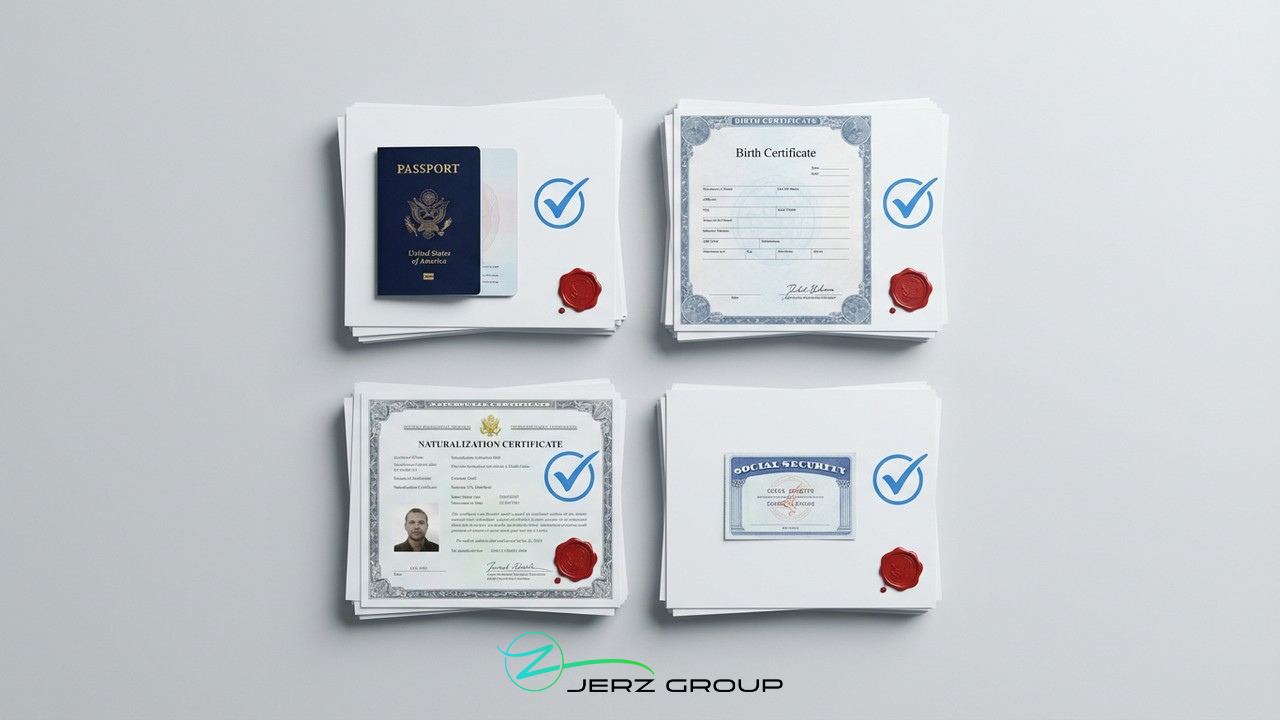
Creating a complete document file is essential for a smooth application. You'll need to collect vital records for each person in your direct ancestral line, starting with yourself and working backward to your German ancestor.
The specific documents required will depend on your family's unique history, but a typical application includes certified copies of several key records. Having everything in order from the start helps avoid delays and requests for further information from the processing authorities.
Your checklist should include:
- Your full birth certificate, showing your parents' names.
- Your parents' birth and marriage certificates.
- Your relevant grandparents' birth and marriage certificates.
- Proof of your ancestor's German citizenship, such as German citizenship certificates, an old German passport, or other official records.
- If applicable, an ancestor's naturalization certificate from another country to prove the citizenship chain was not broken.
Obtaining Missing or Foreign Records: Where to Start
It's common to find gaps in your family's records, especially when dealing with documents that are decades or even a century old. If you're missing a key certificate, don't worry. There are several avenues you can explore to locate the necessary proof.
Start by contacting the vital records offices in the cities or states where your ancestors were born, married, or died. For historical German records, the Standesamt I in Berlin is often a valuable resource. If you're searching for ancestors who emigrated, archival research may be necessary. Resources like passenger lists, census records, and church archives can provide crucial information.
If you need help, the competent German mission (embassy or consulate) in your country can often provide guidance on where to look. They can also assist with authenticating foreign records for use in Germany. While it can take time, diligent research often uncovers the documents needed to complete your application.
Step-by-Step Application Process in 2026
Navigating the German citizenship application process can seem daunting, but it follows a clear, structured path. Once you've confirmed your potential eligibility under the Nationality Act, the journey involves gathering documents, completing forms, and submitting your case to the correct authorities.
Most applications from abroad are handled by the Federal Office of Administration (BVA) in Cologne. Understanding the key stages, from document preparation to final submission, will help you manage the process efficiently and avoid common pitfalls. Let’s break down the steps involved.
Gathering, Translating, and Certifying Your Documents

The first practical step is to collect all the necessary official documents to prove your lineage. This includes birth, marriage, and citizenship records for everyone in your direct line of descent. It's essential to obtain certified copies, as photocopies are generally not accepted.
Once you have your documents, any that are not in German will need to be translated. German law requires that these translations be done by a certified translator. This ensures that the information is accurately conveyed to the German authorities.
Finally, your documents may need to be certified or apostilled. This is an international process that authenticates official documents for use in foreign countries. Key tasks include:
- Obtaining certified copies of all vital records.
- Hiring a sworn translator for non-German documents.
- Getting an apostille for your documents if required by the German mission in your country.
Where and How to Submit Your Application (The BVA and Consulates)
The correct place for your submission depends on where you live. If you reside outside of Germany, the competent authority for most citizenship by descent applications is the Federal Office of Administration (Bundesverwaltungsamt or BVA) in Cologne. You can typically submit your application package through the competent German mission, which is the embassy or consulate responsible for your region.
Some German missions may allow you to mail your application directly to the BVA, but it's always best to check their specific procedures first. The consulate will review your documents for completeness before forwarding them to Germany.
Typical Application Timeline: What to Expect from Start to Finish
Patience is key when it comes to the application timeline for German citizenship. After you submit your application, the processing time at the Federal Office of Administration (BVA) can range from 12 to 36 months. This wide range depends on the complexity of your case, the completeness of your documentation, and the current workload of the BVA.
The initial phase of gathering documents can also take several months, especially if you need to conduct archival research or order records from multiple countries. Submitting a well-organized application with all required information from the start is the best way to avoid unnecessary delays.
Once the BVA makes a decision, you will be notified through the German mission where you applied. If your application is successful, you will receive a Certificate of Nationality (Staatsangehörigkeitsausweis). This certificate is the official proof of your German citizenship and allows you to apply for a German passport.
The Advantages of a German Passport and EU Citizenship
Obtaining a German passport is more than just an acknowledgment of your heritage; it's a gateway to a world of opportunities. As a citizen of Germany, you automatically become a citizen of the European Union, granting you extensive rights across all 27 EU member states.
This includes the freedom of movement to live, work, and study anywhere in the EU, access to world-class healthcare and education, and the security of a strong, stable passport. Let’s explore the specific benefits this powerful travel document can offer you.
Visa-Free Travel, EU Living Rights, and Global Opportunities

A German passport is one of the most powerful in the world, granting you visa-free travel to over 180 countries. This incredible mobility opens up global opportunities for tourism, business, and personal exploration without the hassle of constant visa applications.
Beyond travel, German citizenship gives you the right to live, work, and study in any of the 27 EU member states, as well as in Switzerland, Iceland, Liechtenstein, and Norway. This freedom of movement allows you to pursue a career, start a business, or attend university anywhere in the bloc with the same rights as a local resident.
This access to a vast economic and social area provides unparalleled flexibility. Whether you want to retire on the Mediterranean coast, work in a tech hub in another country, or give your children access to European education, an EU passport makes it possible.
Security, Tax & Financial Freedom with a Second Passport
Holding a second passport from a stable country like Germany provides an invaluable sense of security. In a world of increasing political and economic uncertainty, it serves as a reliable backup plan for you and your family, ensuring you always have a safe place to call home.
Financially, German citizenship can unlock greater freedom. As a non-resident citizen, you may be able to structure your affairs to achieve greater tax efficiency, depending on your circumstances. It can also grant you access to the European banking system, making it easier to open accounts and conduct international business.
This is all part of a larger diversification strategy. A strong second passport is a key asset for global citizens seeking to protect their wealth, enhance their freedom, and ensure long-term security. It is a legal and compliant way to build a more resilient future.
Follow Jerz


